
Bodysuits have a reputation problem. Most people still file them under “lingerie” or “shapewear” and move on, completely missing why they’ve become one of the most functional pieces in luxury streetwear. The truth is that the cleanest, most polished looks you see on the street — the perfectly tailored blazer over a smooth, seamless top, the structured silhouette that somehow never bunches or pulls — are almost always built on a bodysuit. This article breaks down exactly how bodysuits work, why they matter in modern wardrobes, and how to use them to build outfits that actually hold up all day.
Table of Contents
- Why bodysuits matter: Foundation, function, and misconception
- Layering and streetwear: Mechanics of a seamless outfit
- Construction, compression, and comfort: More than shapewear
- Style identity: From outerwear to purposeful layering pieces
- Perspective: Why bodysuits redefine modern style mechanics
- Find your next bodysuit for luxury streetwear layering
- Frequently asked questions
Key Takeaways
| Point | Details |
|---|---|
| Smooth foundation | Bodysuits eliminate bunching under layers and create clean lines in every outfit. |
| Streetwear versatility | They enable seamless pairing of structured outerwear and casual bottoms for luxury-savvy style. |
| Comfort and support | Modern bodysuits use engineered compression, making them both comfortable and body-conscious. |
| Style identity | Construction choices transform bodysuits from workwear to bold evening pieces and cultural devices. |
| Fashion evolution | Bodysuits now bridge practical function with fashion symbolism, redefining modern wardrobes. |
Why bodysuits matter: Foundation, function, and misconception
Let’s start by clearing up the biggest myth. Bodysuits are not primarily lingerie. They are not exclusively shapewear. And they are definitely not just a throwback to the 1990s. In the context of luxury streetwear and modern styling, a bodysuit is a precision tool. Its core job is to stay in place.
According to the tuck-free foundation principle, bodysuits function primarily as a smooth, secure layer that stays put under outer pieces, eliminating the bunching and shifting that regular tops constantly create. That single function changes everything about how you build an outfit. When your base layer doesn’t move, your outerwear sits exactly where it’s supposed to. Your silhouette stays clean from morning to night.
For millennials and Gen Z dressing in the luxury streetwear lane, this matters more than most people admit. The aesthetic is built on contrast: structured pieces paired with relaxed bottoms, tailored with casual, elevated with everyday. Every one of those contrasts only reads correctly when the foundation is seamless. A regular top tucked into high-waisted pants starts pulling out by noon. A bodysuit doesn’t.
Here’s what bodysuits actually do in a modern wardrobe:
- Eliminate shifting and bunching under jackets, blazers, and structured outerwear
- Keep waistbands clean by removing excess fabric bulk at the tuck point
- Create a smooth visual line from shoulder to hip without interruption
- Simplify layering by acting as a stable base that outerwear can anchor to
- Reduce outfit maintenance throughout the day so you’re not constantly adjusting
“Bodysuits function as a tuck-free foundation that stays smooth under outer layers, reducing common problems like bunching and shifting versus regular tops.” — Journelle Bodysuit Guide
The deep v neck bodysuit is a perfect example of how a single neckline choice can shift the entire energy of a look. A deep V creates visual length and works under open blazers without competing for attention. That kind of intentional design is what separates luxury streetwear pieces from fast fashion basics.
Layering and streetwear: Mechanics of a seamless outfit
Having established the foundational function, let’s explore how bodysuits play out in practical streetwear-layering mechanics. The reason bodysuits became a staple in this space isn’t accidental. It’s mechanical.

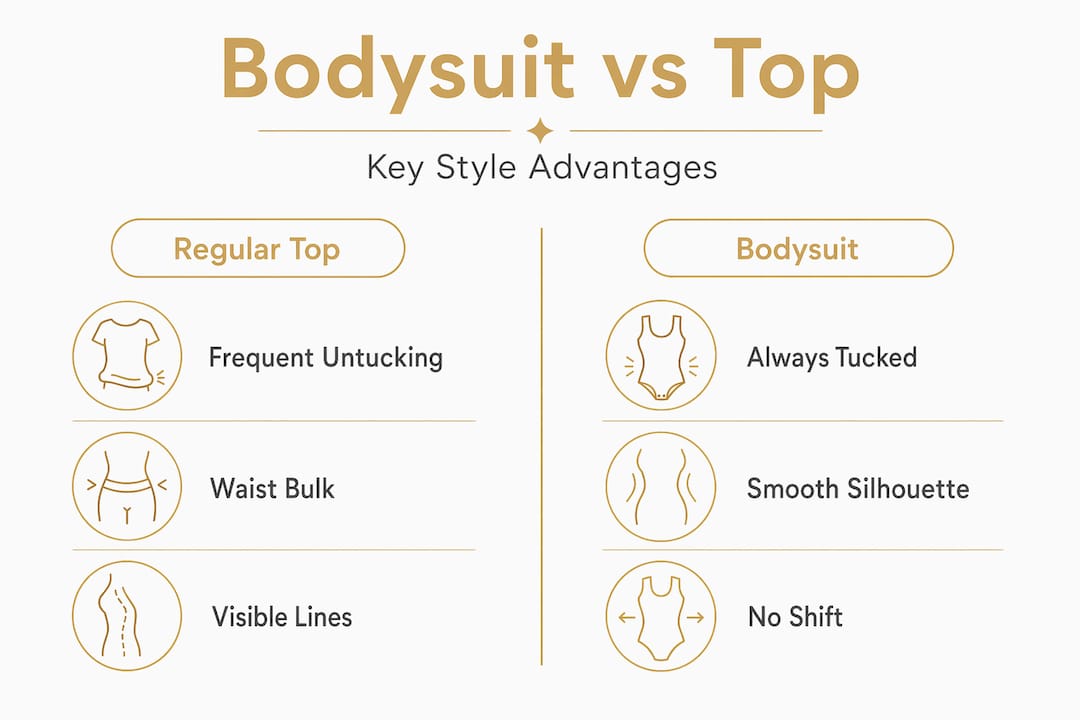
When you layer a blazer over a regular top, you’re fighting physics. The top shifts, the blazer catches on extra fabric, and the whole look loses its edge. Bodysuits solve this by acting as what stylists call a “layering interface.” As streetwear-luxe styling practice shows, bodysuits let you pair sharp tailoring with casual bottoms without the bulk or visual noise that tucking a regular top always creates. The result is a look that reads as intentional rather than thrown together.
Here’s how the mechanics break down in a direct comparison:
| Feature | Regular top | Bodysuit |
|---|---|---|
| Stays tucked all day | Rarely | Always |
| Bulk at waistband | High | Minimal |
| Visual noise under outerwear | Common | Eliminated |
| Movement during wear | Shifts frequently | Stays in place |
| Layering compatibility | Inconsistent | Consistent |
The difference is not subtle. Once you build an outfit on a bodysuit, going back to a regular tucked top feels like a downgrade.
Step-by-step for a bodysuit-based streetwear look:
- Start with your bodysuit as the base layer. Choose a neckline that works with your outerwear’s lapel or collar.
- Add your bottom — wide-leg denim, cargo pants, or PSL leggings for a more athletic-luxe direction.
- Layer your outerwear. A structured blazer, an oversized jacket, or an open shirt works best because the bodysuit gives them something clean to sit against.
- Add your drop shoulder tee as a third layer if you want to play with volume and proportion.
- Finish with footwear that anchors the silhouette — chunky sneakers, boots, or slides depending on the vibe.
For a more dress-forward approach, a bodysuit dress combines the tuck-free function with the visual impact of a full look in one piece. Less decision fatigue, more payoff.
Pro Tip: When layering a bodysuit under a structured blazer, choose a bodysuit with a scoop or V-neck that sits below the lapel. This keeps the neckline from competing with the outerwear and creates a cleaner, more intentional look overall.
Construction, compression, and comfort: More than shapewear
After seeing bodysuits’ layering benefits, it’s vital to understand the variety in construction and how modern technology impacts comfort and performance. Not all bodysuits are built the same. The construction determines everything from how the piece feels after six hours of wear to whether it reads as casual or elevated.
Modern bodysuits increasingly use engineered compression zones to provide targeted support rather than uniform squeeze. This is a significant departure from old-school shapewear logic. Instead of compressing everything equally, engineered zones reinforce specific areas — the core, the lower back, the hip — while leaving other areas free to move naturally. The result is support that feels like structure rather than restriction.
Here’s how minimal and structured bodysuits compare:
| Construction type | Compression level | Best use | Fabric feel |
|---|---|---|---|
| Minimal seam, soft fabric | Low | Everyday layering, casual wear | Lightweight, breathable |
| Structured with support zones | Medium | Work, elevated streetwear | Firm, smooth |
| Full compression, engineered | High | Active wear, formal occasions | Dense, sculpting |
Choosing the wrong construction for the occasion is where most people go wrong. A high-compression bodysuit worn for eight hours of walking around a city is going to feel punishing by hour four. A minimal-construction bodysuit under a blazer at a dinner might not give you the smooth line you’re after. Matching construction to context is the skill.
As long-wear bodysuit comfort research shows, fit and construction are the deciding factors in whether a bodysuit becomes a “set-and-forget” piece or a source of constant distraction. Fabric breathability matters especially for all-day wear. Look for materials with some stretch and moisture-wicking properties if you’re wearing a bodysuit through multiple environments.
Common comfort pitfalls and how to avoid them:
- Sizing too small for compression: Go true to size or up. A bodysuit that’s too tight restricts movement and creates discomfort at the closures.
- Ignoring fabric content: Synthetic fabrics with no breathability trap heat. Look for blends that include natural fibers or moisture management.
- Wrong closure type for your outfit: Snap closures are standard, but hook-and-eye or seamless options exist and may work better depending on your bottom choice.
- Skipping the fit check: Try sitting, bending, and reaching before committing to a bodysuit for all-day wear. Movement reveals fit issues that standing still won’t.
The bodycon dress format takes bodysuit construction principles and extends them into a full silhouette, offering that same smooth, body-conscious structure in a single piece. It’s a useful reference point for understanding how construction shapes the way a garment performs and looks.
Pro Tip: If you’re new to bodysuits and unsure about compression level, start with a low-compression, soft-fabric option for everyday wear. Once you understand how it moves and feels, you can step up to structured versions for more specific occasions.
Style identity: From outerwear to purposeful layering pieces
With construction nuances clarified, it’s crucial to see how style choices give bodysuits their identity and cultural impact. The same garment category can read completely differently depending on fabric, cut, and neckline. That range is exactly what makes bodysuits so powerful in a luxury streetwear context.
An opaque, structured bodysuit with minimal seams reads as workwear or elevated casual. A lace or mesh bodysuit worn under a sheer layer becomes an evening look. The construction and fabric choices determine whether the garment reads as outerwear, lingerie, or a purposeful detail under another layer. This is intentional design language. Knowing how to read it gives you control over how your outfit communicates.
How to select bodysuits for different identities and occasions:
- For work or professional settings: Choose opaque fabrics, high or crew necklines, and minimal detailing. The bodysuit should disappear under your outerwear.
- For evening or going out: Lace, mesh, or satin finishes with lower necklines create visual interest. The bodysuit becomes the statement.
- For casual streetwear: Ribbed cotton, simple cuts, and logo or graphic details work well. Pair with wide-leg pants or shorts.
- For athletic-luxe: Compression fabrics, clean lines, and neutral colors. Layer under a bomber or track jacket.
- For layered editorial looks: Use contrast. A structured bodysuit under a sheer or oversized outer piece creates tension that reads as intentional and fashion-forward.
The cultural dimension of bodysuits goes beyond practicality. Museum-adjacent fashion discussions treat the body-hugging silhouette as a meaningful cultural device, not just a wardrobe convenience. The bodysuit’s relationship to the body — how it defines, shapes, and frames — makes it a garment with genuine symbolic weight. For Gen Z especially, dressing is rarely just about clothes. It’s about identity, expression, and the statement your silhouette makes before you say a word.
“Editorial coverage and museum-adjacent fashion discussions treat the body-hugging silhouette as a meaningful cultural device rather than purely a practical wardrobe tool.” — The New York Times, 2026
The VIL bodysuit dress captures this intersection of practicality and symbolism. The all-over print format turns the body-conscious silhouette into a canvas, making the garment both a functional base and a visual statement simultaneously.
Perspective: Why bodysuits redefine modern style mechanics
Here’s the take that most fashion content won’t give you: bodysuits are not trending. They are not a seasonal moment. They are a permanent fixture in the toolkit of anyone who takes their style seriously, and the reason is completely mechanical rather than aesthetic.
Luxury streetwear’s signature look is built on contrast and precision. Relaxed with structured. Casual with elevated. Soft with sharp. Every one of those contrasts requires a clean foundation to land correctly. Without that foundation, the contrasts blur into noise. The bodysuit is what makes the contrast legible. It’s not the most visible piece in the outfit. It’s the piece that makes every other piece work.
The evolution from basic undergarment to intentional fashion device reflects something important about how sophisticated dressing actually works. The most considered outfits are usually the ones where the invisible decisions are the most deliberate. Choosing the right bodysuit construction, neckline, and compression level for a specific look is exactly that kind of invisible decision. It doesn’t show in the final photo. It shows in the quality of the silhouette.
The conventional fashion narrative focuses on statement pieces. The jacket, the shoe, the bag. But the people who consistently look the most put together are usually the ones obsessing over the foundation. The body-conscious aesthetic isn’t about showing more skin or following a trend. It’s about understanding how your garments relate to your body and using that relationship intentionally.
Our advice: stop chasing hype cycles and start building repeatable style mechanics. A well-chosen bodysuit worn consistently across different outfit formulas will do more for your overall look than any single statement piece. Quality, fit, and function compound over time. Trend pieces don’t.
Find your next bodysuit for luxury streetwear layering
Ready to put these mechanics into practice? The Jack Taylor California collections are built around exactly the kind of intentional, layered dressing this article covers. Each piece is designed with construction quality and California-rooted aesthetic in mind, so the function and the style work together rather than against each other.

Browse the VIL Bodysuit Dress for a bold, all-over-print silhouette that functions as both a statement and a base layer. Pair it with the PSL Essential Legging from the Plains Collection for a clean, athletic-luxe look that moves with you. Every piece in the collection is curated to layer, contrast, and hold its shape, giving you the repeatable style mechanics that luxury streetwear actually demands. Explore the full catalog at jtca.shop and find the foundation your wardrobe has been missing.
Frequently asked questions
What makes a bodysuit different from a regular top?
A bodysuit is designed to stay perfectly tucked, preventing the bunching and shifting that regular tops cause under layers like blazers. As the tuck-free foundation principle confirms, this single function changes how every outer layer sits and performs.
Are bodysuits comfortable enough to wear all day?
Yes, but comfort depends on correct sizing, fabric breathability, and the right compression level for your activity. As long-wear fit research shows, the wrong construction can make a bodysuit uncomfortable rather than the “set-and-forget” piece it’s supposed to be.
How do you pick a bodysuit for work vs. evening or casual wear?
Choose an opaque, minimally detailed bodysuit for work environments and a lace or mesh style for evening occasions. The construction and fabric determine whether the garment reads as professional outerwear, a purposeful detail, or an evening statement.
Are all bodysuits considered shapewear?
No, but many modern bodysuits use targeted compression zones to offer structured support and shaping alongside their primary function as a layering base. The two categories overlap but are not the same.
Do bodysuits have cultural significance in fashion beyond practicality?
Yes. Museum-adjacent fashion discussions treat the body-hugging silhouette as a meaningful cultural device, connecting bodysuits to broader conversations about identity, body image, and fashion symbolism beyond their functional role.