
When you’re spending real money on high-end streetwear, the question of where something was made stops being a detail and becomes the whole story. The california made fashion brand benefits go far beyond a label sewn into a collar. California production shapes how a brand controls quality, builds its narrative, responds to demand, and even how it handles the end of a garment’s life. For buyers who care about exclusivity, craftsmanship, and cultural authenticity, understanding these advantages changes how you shop and what you’re willing to stand behind.
Table of Contents
- How local California production enhances brand transparency and storytelling
- Speed and flexibility: Why California’s fashion ecosystem supports small-batch luxury
- Sustainability advantages driven by California’s SB 707 Responsible Textile Recovery Act
- Control and risk management: How California manufacturing supports luxury brand integrity
- Comparing the benefits of California-made fashion brands
- Why true luxury streetwear brands should prioritize California manufacturing
- Experience California-made luxury: shop exclusive Jack Taylor California collections
- Frequently asked questions
Key Takeaways
| Point | Details |
|---|---|
| Transparent provenance | California production allows consumers to verify authentic, traceable supply chains enhancing brand trust. |
| Faster iteration | Local manufacturing shortens development cycles, enabling small-batch exclusivity and quick quality improvements. |
| Sustainability incentives | New regulations motivate brands to design recyclable and durable garments that reduce future fees and environmental impact. |
| Quality control | Proximity to factories supports direct oversight, minimizing defects and preserving luxury streetwear standards. |
| Brand differentiation | California-made status strengthens storytelling and aligns with consumer values in high-end streetwear. |
How local California production enhances brand transparency and storytelling
The word “transparency” gets thrown around in fashion marketing constantly, but most brands using it can’t actually show you anything. California-made brands operate differently because the supply chain is physically close enough to verify. When a factory is in Los Angeles rather than overseas, a brand’s creative director can walk the floor mid-production. That’s not a small thing.
California-made branding carries real weight precisely because the story is checkable. As TEG notes, “Made in L.A.” production is positioned as a brand-story advantage because customers can better verify provenance and transparency when supply chains are traceable domestically. That traceability is what separates a genuine luxury claim from a marketing line.
For fashion-conscious buyers, this matters in a few specific ways:
- Provenance verification: You can ask where a piece was cut, sewn, and finished, and a California-based brand can actually answer.
- Cultural alignment: California production ties directly into a broader narrative of West Coast craftsmanship, creative independence, and lifestyle authenticity.
- Ethical confidence: Local factories in California operate under U.S. labor laws, which means the workers making your pieces have legal protections that overseas workers often don’t.
- Narrative depth: Brands can share real production stories, specific neighborhoods, specific artisans, rather than vague claims about “quality materials.”
When a brand’s story and its operations are in the same place, the storytelling stops being marketing and starts being documentation.
Pro Tip: When evaluating a California-made brand, ask whether they share factory names, production photos, or supplier relationships publicly. Brands with nothing to hide usually have plenty to show.
Speed and flexibility: Why California’s fashion ecosystem supports small-batch luxury
Exclusivity in streetwear isn’t just about price. It’s about scarcity, timing, and the sense that what you’re wearing wasn’t mass-produced for a million people. California’s local production ecosystem makes that kind of exclusivity operationally possible in a way that overseas manufacturing simply can’t match.
The core advantage is speed. Faster sampling and iteration through proximity to production teams means brands can test new designs quickly rather than waiting weeks for overseas samples to arrive. That speed translates directly into better product. A brand that can see a sample, request changes, and receive a revised version within days will always outperform one waiting months on international shipping cycles.
Here’s how the production timeline difference plays out in practice:
- Sample creation: California-based sampling can take days. Overseas sampling typically takes two to six weeks, not counting shipping delays.
- Revision cycles: Local brands can do multiple revision rounds in the time it takes an overseas factory to ship one sample back.
- Production adjustments: If a quality issue surfaces mid-run, a California factory can correct it the same week. An overseas factory might not catch it until the full order arrives.
- Drop timing: Faster cycles mean brands can respond to cultural moments and seasonal shifts with limited drops that feel current, not like they were planned eight months ago.
Shorter development timelines also reduce the financial risk of committing to large quantities. As Bomme Studio’s comparison of U.S. vs. overseas manufacturing shows, domestic production supports faster sampling, shorter production cycles, and fewer logistics delays, which matters directly for exclusivity in limited drops.
| Factor | California production | Overseas production |
|---|---|---|
| Sample turnaround | 3 to 7 days | 2 to 6 weeks |
| Revision speed | Days | Weeks to months |
| Minimum order quantity | Often 50 to 100 units | Often 500 to 1,000+ units |
| Mid-production corrections | Same week | Post-delivery |
| Drop responsiveness | High | Low |
Pro Tip: If a brand releases genuinely limited drops rather than restocking everything, that’s often a sign they’re working with local production. It’s operationally harder to do small batches from overseas.
Sustainability advantages driven by California’s SB 707 Responsible Textile Recovery Act
Most brands treat sustainability as a marketing category. California just made it a legal one. SB 707, the Responsible Textile Recovery Act, is the first law of its kind in the United States, and it fundamentally changes what it means to be a California-based fashion brand.
Starting in July 2026, California requires apparel producers to participate in a Producer Responsibility Organization (PRO), shifting end-of-life garment recycling responsibilities and costs toward producers rather than consumers or municipalities. In plain terms: brands are now financially responsible for what happens to their clothes after you’re done wearing them.
“SB 707 includes eco-modulated fees incentivizing California brands to design more recyclable and durable products to reduce long-term costs.”
This is where the advantage for California-made brands becomes concrete:
- Design incentives: Brands that build for recyclability and repairability pay lower fees. That financial pressure pushes product design toward quality and longevity.
- Material choices: Difficult-to-recycle blended fabrics become more expensive to use. Brands are pushed toward cleaner material choices.
- Consumer alignment: Buyers who care about eco-friendly fashion in California are now buying from brands that are legally required to care too.
- Long-term cost reduction: Brands that invest in sustainable design now will face lower compliance costs as the law’s requirements increase through 2030.
For you as a buyer, this means California-made brands have a built-in reason to make things that last. The sustainability story isn’t just a brand value anymore. It’s backed by operational and financial consequences.
Control and risk management: How California manufacturing supports luxury brand integrity
Luxury is a promise. Every piece you buy from a high-end streetwear brand carries an implicit guarantee that someone cared about every detail. California manufacturing is one of the most reliable ways to keep that promise, because control requires proximity.
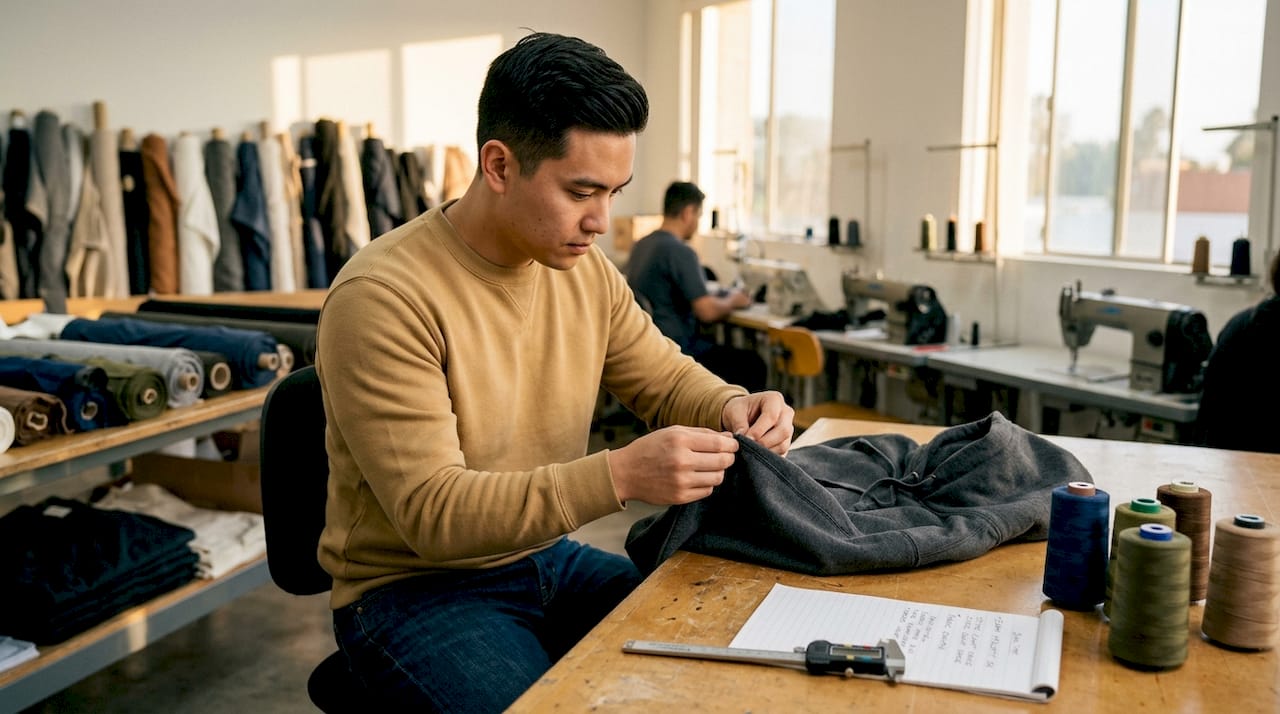
Small luxury brands keep production local for control, and proximity enables direct collaboration and factory oversight that protects both quality and ethics. That’s not a soft benefit. It’s the operational foundation of brand integrity.
Here’s what local control actually looks like in practice:
- Designers can attend fittings and production checks in person rather than relying on photos and video calls.
- Quality issues get caught before the full run is completed, not after 500 units have been made wrong.
- Communication happens in real time, in the same time zone, without translation layers or overnight delays.
- Smaller minimum order quantities mean brands don’t have to overproduce to justify the economics of a run.
Domestic manufacturing offers faster sampling, quicker revisions, and fewer logistics delays, reducing operational risks for exclusivity and quality. The business advantages for retail fashion are especially visible when you compare what can go wrong overseas versus locally.
The overproduction point deserves more attention. Dead stock, meaning unsold inventory, is one of the most damaging things a luxury brand can accumulate. It signals poor planning, drives discounting, and undermines the exclusivity that justifies the price. Local production’s support for small minimums directly reduces that risk.
Comparing the benefits of California-made fashion brands
Pull all of this together and a clear picture emerges. The strongest California fashion advantages don’t exist in isolation. They reinforce each other. Transparency supports brand storytelling. Speed enables exclusivity. Sustainability compliance pushes better design. Control protects quality. Each benefit makes the others more valuable.
As TEG’s analysis confirms, the strongest “Made in L.A.” advantages occur when the brand story aligns with California culture, customers value provenance, speed matters, and price points support the cost premium.
| Benefit | What it means for buyers | What it means for brands |
|---|---|---|
| Transparency | You can verify the story | Builds lasting customer trust |
| Speed | Limited drops feel genuinely exclusive | Faster response to trends and demand |
| Sustainability | Pieces are built to last | Lower compliance costs over time |
| Control | Consistent quality across every piece | Fewer defects, less waste, stronger reputation |
The unique California fashion advantage is that all four of these benefits are structurally supported by where and how production happens. They’re not brand values written on a website. They’re outcomes of local manufacturing.
When you support California-made branding, you’re choosing brands where these advantages are built into the operational model, not just the marketing copy. The impact of supporting local fashion extends beyond the individual purchase. It funds a production ecosystem that keeps these standards alive.
Why true luxury streetwear brands should prioritize California manufacturing
Here’s the uncomfortable truth about the “Made in California” label: most brands using it aren’t using it correctly. They source one or two pieces locally, put the label on their website, and call it a California brand. Savvy buyers are starting to notice.
Real California craftsmanship in fashion means the brand has operational relationships with local factories, not just a mailing address in Los Angeles. It means mid-production quality checks are actually happening. It means the sustainability commitments aren’t just ahead of SB 707’s deadlines because it looks good, but because the brand designed its supply chain that way from the start.
The brands that will win in luxury streetwear over the next decade are the ones treating California manufacturing as a competitive infrastructure, not a marketing angle. When buyers look for proof that control is real, including mid-production factory checks and transparency beyond just a label, they’re doing exactly what the market should reward.
SB 707 makes this even more urgent. Compliance is timeline-driven and influences design decisions from now through 2030, making early investment in recyclability a future-proofing move, not just a regulatory checkbox. Brands that wait until the deadline will scramble. Brands that built for it already have the advantage.
The local vs. global fashion brands debate often gets framed as cost versus quality. That framing misses the point. For luxury streetwear, the real question is control versus convenience. Overseas production offers convenience. California production offers control. And in luxury fashion, control is everything.
Experience California-made luxury: shop exclusive Jack Taylor California collections
If you’ve read this far, you already know what separates genuine California-made luxury from brands that just use the label. Jack Taylor California was built on exactly the principles this article covers: local production, limited runs, and design that reflects the full depth of California’s cultural identity.
The Noir Lotus Hoodie captures the coastal-meets-nocturnal aesthetic that defines the brand’s Lotus and VIL™ collections, crafted with the kind of material weight and finish that only comes from close production oversight. The Origin Tee is a heavyweight cotton piece built for longevity, not trend cycles. And the JT Sovereign Monogram Tee makes the brand’s California identity unmistakable without being loud about it. These aren’t pieces made for everyone. They’re made for buyers who understand why origin matters.
Frequently asked questions
What makes California-made fashion brands different from other luxury streetwear?
California-made brands offer greater supply chain transparency, faster production cycles, and closer factory oversight because local producers oversee production steps directly, resulting in higher quality and genuine exclusivity rather than manufactured scarcity.
How does California’s SB 707 impact fashion brands and consumers?
SB 707 shifts responsibility for textile recycling and repair to producers, and from July 2026, California requires producers to join a Producer Responsibility Organization, which encourages brands to design durable, recyclable products and promotes a circular fashion economy that benefits buyers long-term.
Why is local production preferred for high-end streetwear brands?
Local production enables small batch runs, rapid sampling, and direct quality checks, and small batch brands choose local factories specifically for the control, better quality, and faster feedback loops that maintain the craftsmanship required for genuine luxury streetwear.
Can California-made fashion brands be more sustainable?
Yes. California production encourages sustainable design because fees vary by product recyclability under SB 707, pushing brands to use durable and recyclable materials rather than cheaper blends that cost more to dispose of responsibly.